THE RISE & INEVITABLE FALL OF 'RUN CLUBs'
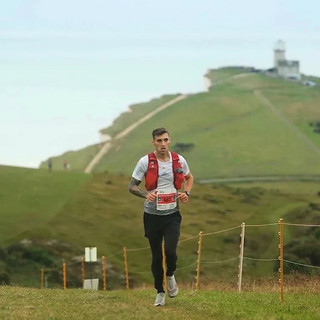

They took over cities, dominated Instagram feeds, and became the most cost-effective community marketing play of the decade. Now the cracks are showing. Here’s an honest, data-backed account of where run clubs are actually headed, what they were always missing, and how smart brands can get ahead before the rest catch up.
Walk through any major city on a Tuesday evening and you'll find them: matching vests, matching demo shoes, a phone on a stick filming nobody in particular, and forty people jogging towards a coffee shop doing the healthiest trade of its life in sponsored Instagram stories.The social run club is everywhere, and it got there fast - global run club membership surged 59% in a single year in 2024 and the number of new clubs tripled in the same period. These numbers are extraordinary. They’re also, if you read them correctly, the early signal of a market that is heading for a significant correction.
This isn’t a polemic against running together, I’ve spent my career in this sport running often with groups, and still do several times a week. So I think I understand what group running can do for people, or at least, what's it's done for me. But there’s a difference between what the modern branded run club actually is and what both brands and members think it is. And that gap, unacknowledged and unaddressed, is what’s going to cause the crash.
HOW WE GOT HERE
The context matters! The pandemic broke something in people, and running put some of it back; during lockdown, going outside was the only social outlet available, and millions of people discovered the sport almost by accident. When the world reopened, they didn’t stop. They organised. Cities filled with informal groups and Strava clubs proliferated. The social run, once the domain of harriers and track club athletes, became the defining social ritual of a generation of new movers.
What drove this wasn’t fitness; A Strava report found that 84% of users cited social connection as their primary reason for exercising. For Gen Z specifically, the number joining run clubs to meet new people sits at 72%. A New York Times headline from 2024 called run clubs “the new dating app.” and The Wall Street Journal ran its own version three months later. Running had become, almost overnight, one of the most effective ways to find your people in a city that increasingly makes that hard.
Brands noticed immediately. Community had been a marketing buzzword for years in marketing departments but it had always been expensive to engage eith and had an unreliable ROI - the branded/supported run club solved that problem elegantly. Low infrastructure cost. High social media value. Authentic physical touchpoints. Emotional resonance. A built-in content machine. For a while, every marketing team in the sport was trying to figure out how to get one off the ground in multiple major metropolitan areas across Europe and North America.
+59% - Global run club membership growth, 2024 alone [Strava, Year in Sport Report 2024]
3× - New clubs launched in 2024 vs the year prior [Strava, Year in Sport Report 2024]
+25% - US running clubs in the past five years [Running USA, 2024]
The numbers were real and so was the energy. So what's the catch? When every brand simultaneously reaches the same insight and executes the same playbook, the insight stops being an insight. It just becomes the format. As Luke Hodgson put it in Commerce Thinking, the brand run club has become "the new branded tote bag." And once everyone's got one, nobody wants to be seen carrying it.

A QUESTION OF TERMINOLOGY
Before going further, it’s worth being precise about what we’re actually talking about when we say “run club” in 2026. Because there’s a significant mismatch between the name and the reality, and that mismatch matters.
WHAT IS A “CLUB,” ACTUALLY?
The Road Runners Club of America, the oldest national running organisation in the US, defines a running club as an association with formal organisation, whether nonprofit or for-profit, existing to promote community-based running in pursuit of “enjoyment, health, well-being and competition.” A club typically offers structured training programmes, coaching, race entries, and organised events. It is, by definition an institution with longevity, structure, and accountability.
What most people mean when they say “run club” in 2025 is something the sport already had a name for: a running crew . Crews emerged in the early 2000s, first in New York City, as informal urban running groups focused on city streets and community, explicitly differentiated from traditional club structures. The distinction was always intentional; crews were never clubs, instead they were something lighter, looser, and more social.
The branding shift from “crew” to “club” has created an expectation gap that is quietly hollowing out a lot of these groups from the inside.
The traditional athletics club model that the word “club” actually implies is a fundamentally different proposition. Think of England Athletics’ 1,750 affiliated clubs, or the Road Runners Club of America’s hundreds of member organisations. These institutions offer qualified coaching. They enter teams in cross country leagues, track championships, and road race competitions. They have formal governance, public liability insurance, welfare officers, and youth programmes. They exist to develop athletes, not audiences.
Most branded run clubs offer none of this. There is no qualified coach on the Tuesday night run. There is no competitive pathway. There is no governance structure. Nobody is tracking whether you’ve improved, or helping you understand why you’re getting injured, or writing you a periodized, adaptable and taiolored plan. What there is, typically, is a good-natured volunteer with a phone planning app (at best) and a lot of enthusiasm, now that’s fine for what it is, but it’s not a club. And calling it one sets expectations it was never built to meet.
“The modern run club borrowed the word “club” but didn’t borrow what the word actually means. And runners are starting to notice.” - me
THE PROGRESSION PROBLEM NOBODY’S TALKING ABOUT
The most revealing thing about the current run club landscape isn’t the saturation. It’s what the data shows about where runners go after they start.
The assumption baked into the branded run club model is that new runners want a 5K social run with coffee after, and they’ll want that forever. But running doesn’t work like that. Runners progress. They get curious. They get competitive. They set bigger goals. And the evidence shows that this is happening at scale, and faster than most brands have anticipated.
Marathon participation surged 14.6% year-over-year in 2024. The most dramatic shift was generational: the 25-29 age bracket became the single largest finisher group at the NYC Marathon, overtaking the 30-34 group for the first time in the race’s history. The share of NYC Marathon finishers under 30 jumped from 17% in 2022 to 24% in 2025. That’s not incremental change, that’s a wave of new runners, recruited in part through social run clubs over the last few years, who have now outgrown the format that recruited them.
+14.6% - Marathon participation growth year-on-year, 2024 [RunRepeat, State of US Marathons 2025]
25–29 - Now the biggest age bracket at the NYC Marathon [Sportico / Running Insight, 2025]
+1676% - Ultramarathon participation since 1996 [RunRepeat, State of Ultra Running 2020]
+12.3% - Trail running participants in the US in a single year, 2023 [SFIA, Topline Participation Report 2024]
Ultrarunning tells an even starker story. Participation has grown 1,676% since 1996, and the sport’s growth rate has outpaced marathons since 2009 and 5Ks since 2015. Trail running participation in the US grew 12.3% in a single year, from 13.2 million to 14.8 million participants. Participation in trail events between 50 and 100 miles saw a 77% jump in 2024 alone. And the Western States 100 lottery, which requires a qualifier of 100K or longer just to enter, now attracts over 10,000 unique entrants competing for roughly 275-325 spots.
These are not casual social runners, these are people who started somewhere, got serious, and kept going. And that's great!!! A significant number of them started at a run club Wednesday night 5K two or three years ago,but run clubs have no pathway to offer many of them now. The social run that recruited them has nothing left to give; no coached track sessions. No structured long run programme. No competitive outlet. No community built around the specific demands of going longer and/or getting fitter. When runners outgrow the format, they leave, and the data suggests they leave for good.
Consider what a traditional athletics club actually offers a developing runner compared to its modern equivalent:
MODERN BRANDED RUN CLUB
- Informal group runs, usually 5–10K
- Volunteer pace leaders, no coaching qualifications
- No structured training plans or periodisation
- No competitive pathway or club championships
- No cross country or track league involvement
- No formal governance, welfare structure, or insurance
- No youth development programmes
- Dependent on one or two key volunteers to function
TRADITIONAL ATHLETICS CLUB
- Structured sessions across all distances and paces
- Qualified, licensed coaches at multiple levels
- Periodised training plans for individual goals
- Club representation in regional and national competition
- Cross country, road, fell, and track league participation
- Formal governance, liability cover, and safeguarding/welfare officers
- Junior and youth sections feeding the sport’s pipeline
- Institutional resilience beyond individual leaders
None of this is a criticism of the people running these social groups, many of them are doing extraordinary things for community, but the format was designed for recruitment, not retention. And as the runners it recruited get more experienced, the format often has nothing left to offer them.
THE TRANSITION THAT’S ALREADY HAPPENING
Here’s the thing the pessimistic read of run clubs misses: some of them are figuring this out. Quietly, without much fanfare, a subset of the run clubs that launched in 2021 and 2022 are doing something genuinely interesting. They’re growing up. They’re becoming, in practice if not always in name, actual running clubs.
The pattern tends to look the same wherever it happens. A run club starts with the usual format: a Tuesday evening 5K, a coffee shop partnership, some matching kit. It gets traction. A core of regulars forms. And then, after twelve to eighteen months, the organiser notices something: the regulars aren’t satisfied anymore. They’ve got their first 5K PB. They’ve signed up for a half marathon. They’re asking about track nights. They want to know about cross country leagues. They’re curious about trail. They’ve outgrown the format that got them through the door, and they don’t want to leave the community, instead they want the community to grow with them.
The clubs that respond to this are the ones worth watching, they add a coached track session on Thursday evenings, started a weekend long run group that builds mileage progressively, reached out to their local athletics association and found out what affiliation actually involves. They enter a team in a cross country league for the first time and discover that competing as a club, wearing the same vest, cheering each other through a muddy field in November, produces a quality of belonging that the Tuesday coffee run never came close to.
What they’re doing, without necessarily naming it, is replicating what the traditional athletics club model has known for a century: that athletic development and community are not competing propositions. They reinforce each other. A runner who is getting better, who has a coach, who has a target race and a training plan and teammates who care about their splits, is a runner who is deeply invested in their club. That investment has nothing to do with the free catered pastry at the end of a branded 5K, it has everything to do with the fact that the club helped them become a different athlete than they were a year ago.
“The run clubs that survive the next decade won’t be the ones that stayed social. They’ll be the ones that got serious about the athletes they’d already built.” - me again
The practical steps in this transition are less daunting than they might appear. Getting a qualified coach involved doesn’t require building a $100,000 facility. It requires finding a USATF, UESCA-certified or England Athletics-qualified coach willing to lead sessions, and finding the budget to pay them properly rather than expecting them to volunteer. Entering a cross country league requires registering with the relevant national body and showing up with a team on a Saturday morning. Introducing a marathon training programme requires a coach, a plan, and a group chat. The infrastructure needed to transition from social run to proper athletic community is genuinely accessible, the main thing in the way is the assumption that it would require becoming something more formal and therefore less fun.
That assumption is wrong, talk to any runner who moved from a social run club to a traditional athletics club and the word you hear most often isn’t “structured” or “competitive.” It’s “addictive.” Because athletic improvement, when supported by a real coaching environment and genuine competitive stakes, is one of the most engaging experiences available to a human being. It’s what running was always supposed to offer. The social run club opened the door. The transition to something more structured is what keeps people walking through it for the next twenty years.
There are also trail-specific versions of this transition happening right now, and they may be the most interesting of all. Trail crews that started as social groups doing Saturday morning missions in the hills are organically developing into something more: group training weekends, race preparation camps, shared entry into local mountain races, collective knowledge-sharing about nutrition and elevation and kit that goes far beyond what any 5K social run produces. The nature of trail running demands more time and more logistical planning than road running, and that spce creates deep bonds and a greater appetite for structured support. The trail clubs forming right now out of what began as urban run crews are building the kind of community that will still be running together in fifteen years.
The models to watch
Scrambled Legs in London is a good example of what intentional evolution looks like. They identified a specific gap, Saturday long runs for marathon-training runners, and built a club around that need rather than around the generic social run format. Their members show up consistently, in and out of race season, because the club serves a real training purpose rather than a social one. It didn’t start as a traditional athletics club. But it became something more structured, more purposeful, and ultimately more retentive than the Tuesday coffee run model could ever be.
In New York City, After Hours Athletics is worth paying attention to for the same reason. While hundreds of NYC run clubs are competing for the same Tuesday evening social runner, After Hours has planted their flag somewhere more interesting: “personalized coaching for performance driven running.” No lifestyle branding. No post-run cocktails. Just athletes who want to get better, and a structure built to help them do it. In a city saturated with social runs, that positioning stands out precisely because it demands something from its members rather than simply accommodating them. That’s the direction of travel for the clubs that make it.
In Chicago, Demon Hours has launched The Forge: a training weekend where a group of dedicated athletes targeting fall marathons commit to a full camp under a qualified coach, with a chef handling the fuelling. It's not a retreat with a run bolted on. The schedule runs from a Thursday evening shakeout through to a Sunday long progression run, taking in a proper track session, strength and mobility work, recovery protocols, and athlete seminars covering training principles and how to structure a marathon block. The pitch is simple: a weekend that actually makes you faster and informed, not just more photographed.
THE STRUCTURAL WEAKNESS BRANDS DON’T WANT TO ADMIT
There is a systemic vulnerability at the heart of almost every branded run club that nobody in the industry talks about honestly. One market report on the run club sector identified it clearly, if politely: “Most run clubs are founded and led by charismatic individuals who often work for free. Burnout among these leaders is a major risk factor.”
That’s understating it, you see the reality is that the entire community value of these groups is concentrated in one or two people who are carrying enormous operational weight on volunteer hours, with minimal recognition, no job security, and a brand relationship that often extracts far more than it returns. When those people leave, and they do leave, the club doesn’t just lose a leader. It loses its entire social fabric. Members who came for the community came for the person running it. Take the person away, and what’s left is a route and a start time. That’s not a club, it's a calendar event.
Traditional athletics clubs don’t have this problem. Their governance structures, volunteer committees, and institutional identity mean they outlast any individual. They’ve been doing so for over a century. Sunderland Harriers was established in 1884. England Athletics has 1,750 affiliated clubs, almost all of which predate the concept of brand community by several decades. That institutional resilience is not a coincidence, it’s the result of building with structure rather than personality.
Worth noting
Even the most celebrated modern run clubs that have managed to build real institutional depth, groups like Run Dem Crew in London or Midnight Runners globally, succeed precisely because they went beyond the social run format. They built governance, values, pathways, and a reason to exist that transcended the weekly jog. Midnight Runners is explicitly volunteer-led and community-owned. Run Dem Crew, founded by Charlie Dark, has never been about running, it’s been about young people, mentorship, and belonging in one of the world’s most alienating cities. These aren’t clubs in the branded sense, they’re institutions and they’re the exception, not the rule.
THE SAFEGUARDING PROBLEM NOBODY WANTS TO NAME
There is a darker dimension to the governance vacuum that the industry has been conspicuously slow to address. It is not just about burnout, or about clubs dissolving when their founder moves city. It is about what happens when a charismatic individual accumulates social authority over a large group of people who trust them implicitly, in an environment with no formal governance, no welfare or safeguarding officer, no code of conduct, and no accountability structure of any kind.
The conditions run clubs routinely operate in are, structurally, almost identical to the conditions that allowed decades of abuse to go unchallenged in the yoga world. A magnetic, often male leader. A community organised around admiration for that leader. A culture of belonging that makes dissent feel like betrayal. No formal reporting mechanism. No institutional oversight. And a membership who came because they trusted the person at the front, not the institution behind them, because there is no institution behind them.
The yoga industry’s reckoning arrived loudly. Bikram Choudhury, founder of Bikram hot yoga and one of the most influential figures in the Western wellness industry, was found liable for sexual harassment and fled the country to avoid paying $6.8 million in damages, with six further lawsuits outstanding. Pattabhi Jois, the revered founder of Ashtanga Vinyasa yoga, was the subject of a two-year investigation by The Walrus that found nine women willing to go on record describing systematic sexual assault disguised as “adjustments.” John Friend, founder of Anusara Yoga, stepped down from his position in 2012 following allegations he had been sleeping with female students. In every case, the same structural features were present: unchecked authority, a devoted community, the conflation of the leader with the practice itself, and years of whispered rumour that never found a formal mechanism to become something more.
“The yoga industry took decades to reckon with what unchecked power does to a community built on trust. Running is already showing the same early warning signs, and repeating the same silence.”
Running’s version is beginning to surface. Online accounts and community discussions, particularly in cities with dense, overlapping run club scenes, have raised concerns about the behaviour of male club leaders towards female members: boundary violations, the exploitation of the social closeness running creates, and a culture of loyalty around charismatic founders that makes it difficult for concerns to be raised openly. A 2023 Adidas study found that 38% of women have experienced physical or verbal harassment while running, with more than half reporting unwanted attention or sexist and sexual comments. Women’s-only run clubs are growing fastest precisely because mixed-gender clubs have not adequately addressed safety. According to a 2024 Asics study, a significant number of Canadian women cited “lack of safe spaces” as a barrier to running altogether. The problem is not confined to public streets. It is inside the groups.
What makes the run club context particularly acute is the intimacy the format creates. Running together, especially over longer distances and in early morning or late evening hours, generates a level of physical and emotional closeness that is unusual in casual social settings. People share things on a long run that they wouldn’t share at a party. That vulnerability is part of what makes running communities so powerful, and it is exactly what makes the absence of safeguarding so serious.
The contrast with the traditional athletics club model is stark and instructive. England Athletics requires every affiliated club to appoint a trained Lead Welfare Officer, implement a safeguarding code of conduct, ensure all coaches and leaders are licensed and DBS-checked, and make reporting mechanisms clearly visible to all members. From 2025/26, safeguarding compliance was introduced as a mandatory Club Standard, meaning clubs without it lose their affiliated status. The Association of Running Clubs mandates that all suspicions and allegations of abuse are responded to rapidly and in coordination with police and social services where necessary. These are not bureaucratic niceties. They are structural protections that have been developed by institutions that understand what happens when they aren’t there.
Branded run clubs have none of this. There is no welfare officer. There is no DBS check for the person leading Tuesday night runs. There is no code of conduct. There is no reporting line. There is no governing body that can investigate a complaint or remove a leader. The absence of these things does not mean abuse is inevitable but it does mean that when it occurs, there is nothing to stop it, nothing to report it to, and a community culture built on loyalty to an individual that actively discourages anyone from being the first to say something.
The yoga industry’s reckoning cost reputations, careers, and in several cases millions of dollars in damages. It took decades because the structural conditions made speaking up almost impossible, and because the brands and media outlets that had built their identity around the culture were the last to want to hear it. Running brands investing heavily in unstructured, unregulated community leadership would do well to read that history carefully. The format they are funding has the same structural vulnerabilities, the question is whether they act before or after the equivalent moment arrives.
THE SATURATION AND AUTHENTICITY CRISIS
The numbers that looked like success in 2024 and 2025 are already turning into a problem in 2026. The tripling of new clubs in a single year didn’t produce three times the value. It produced the same total amount of community interest spread across three times as many vessels. What that actually means on the ground is: most clubs are smaller than they used to be, most leaders are more burned out than they used to be, and most brands are getting a worse return than they were eighteen months ago.
When every coffee shop, supplement brand, shoe retailer, and gym has a Tuesday night run, the Tuesday night run stops being special. It stops being a scene. It becomes infrastructure, and not particularly interesting infrastructure at that, runners are good at choosing where to spend their limited recovery time. A 5K followed by a flat white from a brand that’s running four other identical activations across the city this week is not a compelling proposition for someone who has been running for two years and has a half marathon PB to attack.
The other thing killing these groups is something more subtle: runners are perceptive. They’re often highly educated, data-literate, and physically attuned in a way that makes them unusually sensitive to authenticity. They train in the dark and the rain, they know the difference between someone who loves running and someone who’s been hired to perform loving running. When a brand’s presence at a run club feels extractive rather than invested, they notice and they don’t necessarily say anything, but the next week there are four fewer people at the front of the group, and the week after that, three fewer.
“Runners are not a passive audience. They spend hours every week alone with their thoughts. They can tell the difference between a community that exists for them and a community that exists for someone else’s quarterly targets.”
THE LOCAL COMMUNITY GAP
There’s another dimension to this that rarely gets discussed: the relationship between run clubs and the communities they exist in. Or, more accurately, the lack of one.
Traditional athletics clubs are civic institutions; they organise races that raise money for local charities and field teams in regional cross country leagues, which brings different clubs together and creates competitive stakes that extend beyond the individual. They run youth sections, volunteer at local parkruns and embed themselves in the social infrastructure of their communities in ways that create mutual dependency and genuine local investment.
Most branded run clubs have no relationship with their local running ecosystem at all. They don’t enter club championships. They don’t host races. They don’t coordinate with England Athletics affiliates, USATF or the RRCA. They don’t develop youth runners. They exist parallel to the running community rather than within it, and that parallel existence is increasingly visible to runners who are deepening their engagement with the sport, because those runners eventually encounter the real local running community, the harriers, the road running clubs, the track clubs, and they realize that there’s a world their Tuesday night group never mentioned, one that's not using them for the next quartley report.
For brands, this is a missed opportunity of significant scale. The local running community, the people who’ve been running for ten years, who volunteer at races, who coach kids on weekends, who compete in cross country in November when it’s 28 degrees (Farenheit) and the field is mud, these are the most credible, engaged, and brand-loyal athletes in the sport. They’re not hard to find, they’re just not glamorous enough for the content calendar.
WHERE THE GROWTH IS ACTUALLY GOING
The social run club is plateauing but everything else is growing. This is the clearest signal in the data, and it’s one that brands operating in this space need to understand quickly.
Trail running is the most significant growth story in the sport right now. US trail running participation grew 25.6% between 2021 and 2023, and 12.3% in 2023 alone. UTMB, the sport’s most prominent race series, reported that trail activity uploads on Strava doubled in the first half of 2025 compared to the same period three years earlier. For every trail runner in the US, there are still 5.3 road runners. That ratio isn’t a ceiling. It’s an opportunity. Road running is approaching saturation. Trail is nowhere near it.
14.8M - US trail runners in 2023, up from 13.2M in 2022 (+12.3%) [SFIA, Topline Participation Report 2024]
2× - Increase in trail activity uploads on Strava, H1 2025 vs H1 2022 [UTMB / Strava, September 2025]
The trail running demographic also looks different from the road run club crowd in ways that matter to brands. Trail runners in the US skew higher-income, with 66% earning over $100K annually. They’re deeply loyal to brands that demonstrate genuine understanding of the culture, and they’re deeply hostile to brands that don’t. The State of Trail Running Report found that 56% of trail runners have been running for six years or more. These are not casual participants looking for a community to belong to. They have communities. They want brands that serve those communities rather than trying to build new ones from scratch.
The values-driven community is also rising. Groups organised around shared identity or cause, LGBTQ+ running communities, environmental running collectives, race-specific training groups, fundraising-centred events, are growing in places where generic social clubs are stalling. The thread running through all of them is that they exist for a reason beyond the run. That reason is what creates the depth of belonging that makes people show up in February when it’s raining and they’re tired. Brands that align with that reason rather than trying to substitute for it will find themselves in a fundamentally different position than those still sponsoring Tuesday night 5Ks.
HOW TO GET AHEAD OF IT
The opportunity here is real and it’s time-limited. The brands that move in the next 12 to 18 months will own the narrative. The brands that wait until the correction is fully visible will be scrambling for position in a much more crowded and much more sceptical landscape. Here’s where the investment should actually go.
Stop backing formats. Start backing people.
The community value in any run club was never in the club itself. It was in the specific person who built it, who runs it week after week, who knows every member’s name and injury history and race goal. Find those people. Pay them properly. Give them genuine autonomy and real resource. The trust they carry with their community took years to build, and it cannot be replicated by a brand activating into an empty space. Brands that invest in specific, credible individuals rather than generic community formats will access a depth of loyalty that sponsored group runs will never reach.
Invest in coaching infrastructure, not just community vibes.
The most forward-thinking brands in this space are already recognising that the next chapter of community running is structured, not social. Runners are progressing. They want periodised plans. They want someone qualified to tell them why their left hip is off. They want track sessions with purpose and long runs with pacing targets. Brands that help fund coaching infrastructure, whether that’s supporting RRCA, UESCA, USATF, or England Athletics certification programmes, partnering with coaches to offer subsidised training plans, or building genuine coaching access into their community offering, will meet runners where they’re actually heading rather than where they’ve already been.
Get off the road. Seriously.
Trail running is the growth frontier of the sport right now and it is deeply underserved by brand community investment relative to its size and trajectory. The trail runner profile is highly engaged, high-spending, and extraordinarily loyal to brands that demonstrate genuine understanding of the culture. Trail communities also look nothing like branded road run clubs. They’re smaller, more intentional, forged by shared suffering on technical terrain in the dark. That type of bond is qualitatively different from anything produced by a weekday evening 5K. Brands that establish genuine credibility in trail before the inevitable wave of road club dollars shifts there will enjoy the kind of competitive positioning that takes years to challenge.
Engage the local running ecosystem, not just your own activation.
The traditional athletics club world is still largely untouched by meaningful brand investment, even by brands which have affiliated track clubs . These are institutions that have survived for decades on volunteer labour, minimal budgets, and an enormous amount of passion. They coach young athletes who go on to compete nationally. They organise races that become fixtures in the local sporting calendar. They are the grassroots infrastructure of the entire sport. Brands that show up in this world, not as sponsors wanting a logo on a banner, but as genuine partners willing to fund coaching qualifications, buy timing equipment, support youth sections, will build credibility with the running community that no amount of Instagram activation can match.
Attach to a cause that the community actually cares about.
The campaigns that are cutting through in running right now share one common thread: they exist for something beyond the product or the brand. Not performative charitable gestures, but genuine structural alignment with a mission. Runners who are deepening their engagement with the sport are also, as a demographic, unusually values-conscious. They read the labels. They follow the money. They notice when a brand’s community investment is designed to extract rather than to give. Brands that connect their community work to something runners genuinely care about, whether that’s environmental access, social equity, inclusion, or community health, will generate the kind of word-of-mouth and loyalty that a sponsored evening run simply cannot produce.
Build infrastructure that outlasts any single person.
The structural fragility of most branded run clubs is entirely avoidable. Brands that are serious about community need to treat community leadership as a real professional role with real compensation, clear succession planning, institutional support, and governance that doesn’t collapse when the founder burns out or moves city. This means thinking less like a marketing department and more like a sports organisation. Operational structure is not glamorous, but it’s the difference between a community that lasts ten years and one that lasts eighteen months.
Go niche and go deep. Breadth is no longer the signal.
The metric most brands are using to evaluate community investment is reach: how many people showed up, how many impressions, how many pieces of content. These are the wrong numbers. They measure visibility, not belonging. The communities that are growing in genuine depth right now are small, specific, and fiercely committed. A run club of 40 people who show up every week in the rain, who text each other about their race results, who travel together to events, who buy the same kit because they genuinely believe in it: that cohort is worth exponentially more to a brand than a thousand people who turned up once for the free banana and the photo opportunity. Measure belonging. Not attendance - this means getting comfortable with qualitative metrics.
THE LONG GAME
The social run club was never supposed to be the destination, it was always, at its best, the entry point. A low-barrier, low-pressure introduction to a sport that rewards long-term commitment more than almost any other, and for that purpose, it worked. Millions of people are running who weren’t five years ago. Tens of thousands of runners discovered a community they didn’t know they needed. That is genuinely valuable and it shouldn’t be undersold.
But the entry point is not the whole journey. And the brands and organisers who confused the two are now watching their retention numbers tell the story their attendance figures never did.
The runners who started at infromal evening 5Ks in 2021 and 2022 are now training for marathons. Some of them are running ultras. Some are on the track. Some are on trails at 5am, covering technical terrain that would have been unimaginable to them three years ago. They didn’t slow down and wait for the run club format to catch up with them, they found what they needed elsewhere; the athletics clubs that were quietly doing the work of developing athletes all along, the harriers, the road running clubs, the trail running associations, absorbed them without fanfare and without an Instagram campaign.
The clubs that survive and thrive will be the ones that made the transition: from a social run to also offering structured training, from pace leaders to qualified coaches, from a weekly 5km run to now offering a Thursday track session, Thursday easy miles, Saturday structured long run and November cross country in the mud. From crew to club, in the full sense of the word. That transition is harder than running a weekly social group as it requires governance, qualification, planning, and a willingness to take athlete development seriously rather than just athlete attendance. But it’s the only version of this that builds something durable.
The brands that move now, that put their resources behind that transition rather than doubling down on a saturating format, will own the next decade. They’ll be aligned with the direction runners are already heading rather than chasing a community that is beginning to move on. They’ll be building infrastructure with actual institutional resilience rather than renting community on the goodwill of a single unpaid organizer.
The window is open. Probably not for much longer.
By Ajay Hanspal | AJ Run Coaching | aj-run-coaching.com


Comments