If Trail Running Wants to Be Taken Seriously, It Needs to Start Acting Like It
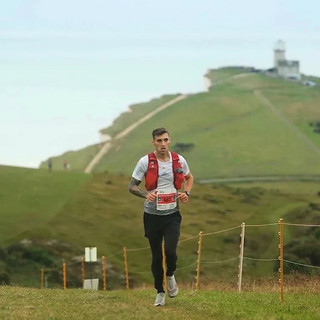

Trail running is in the middle of professionalizing, and the gap between what that means commercially and what it means structurally is getting harder to ignore.
The sport has spent a decade building itself into something the mainstream takes notice of; record livestream audiences, major brand sponsorships, entry fees pushing $2,000 and media infrastructure that can put a 253-mile race in an Arizona desert in front of 300,000 people on a Wednesday afternoon. The racing itself has always been extraordinary but now the business is catching up, and everyone wants credit for that.
But professionalisation is not just upside, it comes with obligations to safety, to clean competition, to governance that applies to everyone equally - and those cannot be claimed selectively. You do not get the platform and the sponsorship money and the mainstream legitimacy while still operating with the accountability standards of a club race on a Saturday morning, and yet the sport keeps trying to. The 2026 Cocodona 250 was the most visible example yet of what that looks like in practice.
Rachel Entrekin won in 56:09:48, the first woman to win the race outright, breaking the overall course record by over two hours. That performance was everything the sport says it is, but what happened around it was not.
01 A Woman Died. The Race Continued. No One Has Explained Why.
Let's start here. On May 5th, a woman in her 40s collapsed near the Groom Creek trailhead, between miles 75 and 80 of the course, around 5pm local time. First responders attended but, she died. Race co-director Erika Snyder confirmed the death and declined further details at the family’s request, organisers posted a statement on Instagram that evening.
Then the race continued.
I want to be very precise about what I am and am not saying; deaths in endurance sport are relatively rare and nobody who enters a 253-mile race in the Arizona desert is naive about risk. Race directors are put in an impossible position when something like this happens, there is no clean decision available to them.
But the absence of any public accountability is something else entirely, and it is the thing we need to talk about.
We do not know what killed her, we do not know whether any protocol failed, or whether everything that could be done was done. That matters, because the causes of death in endurance events are not mysterious, in fact they are well understood by sports medicine. Cardiac events are the most common cause of fatality in distance running and exercise-associated hyponatremia (more on this later), where sodium levels drop to critically low levels through excessive fluid intake, has killed athletes in marathon, Ironman, and ultramarathon events and continues to do so. Exertional heatstroke is the second leading cause of sport mortality after cardiac events. A runner in her 40s collapsing at mile 75 to 80 of a 250-mile desert race on a May afternoon in Arizona could have been any of these. The cause determines whether the response was adequate, the cause determines what changes and not knowing is not a position a professionalised sport should be remotely comfortable with.
Compare this to Formula 1: On May 1st 1994, Ayrton Senna died at the San Marino Grand Prix at Imola. The FIA called an emergency review meeting within two days and by the next race (Monaco, two weeks later) new safety protocols were already in force. Computer analysis was commissioned of 27 high-risk corners across all Formula 1-grade circuits and the HANS device (which stabilises the head and neck in a crash) was eventually mandated for all drivers by 2003. Between Senna’s death in 1994 and Jules Bianchi’s in 2014, a span of twenty years, there was not a single fatality at a Formula 1 championship race. The sport treated a death as a problem to be analysed and solved, not a tragedy to be honoured and folded into the mythology.
Boxing has mandatory pre-fight medicals and ringside physicians with the authority to stop a contest at any point. The NFL now has independent neurological consultants on sidelines who can remove players from play against the wishes of coaches and the athletes themselves. Professional cycling requires pre-race cardiac screening at the highest levels of competition. These are not radical demands, instead they are the baseline expectation of sports that have decided athlete safety is a non-negotiable operational priority rather than a line in a waiver.
What does ultrarunning have? Aid station volunteers, a liability waiver, and (in this case) an Instagram statement asking runners to carry a memory. The sport deserves better safeguarding.
That statement used the language of honour and community: “carry the memory of this runner with you on the trails.”, that is the language of a race that wants grief to function as forward momentum rather than as a reason to stop and ask hard questions. The race costs $1,695 to enter, it sold out 404 runners and it drew over 300,000 livestream viewers in a single day, when an event operates at that commercial scale and someone dies on the course, “we’re continuing in their honour” is not accountability. It is the absence of it dressed up in something warmer.
What caused her death? What was the medical provision at miles 75 to 80 at 5pm on a May afternoon in Arizona? What will change before 400 people line up again next year? These are not hostile questions. They are the minimum standard of any sport that genuinely means what it says about community and safety. The fact that they have not been asked loudly enough, that the coverage moved on to times and highlights within hours says something about where the culture actually is.
03 A Major Media Outlet Normalised NSAID Use Mid-Race, Then Quietly Deleted the Reference
During the race, @outside_run (the Instagram account of Outside, parent brand of Trail Runner Magazine) posted a Reel about men’s runner Kilian Korth. The original caption referenced Korth taking ibuprofen during the race and highly regarded dietician Renee McGregor amongst others commented with distain, the caption was edited and a note added at the bottom: “This caption has been edited to remove a reference to taking ibuprofen during the race.”
If the reference was fine to include you leave it in, and it wasn’t fine, you don’t post it in the first place. What you don’t do, what no publication with any genuine responsibility to its audience does is post it, get called out in the comments, scrub it, and move on without a word of explanation.
The evidence on NSAIDs in endurance sport is not ambiguous: research shows around 60% of ultramarathon runners already use them, which is part of the problem. NSAIDs during prolonged exercise compound the exact physiological stress that multi-day racing creates: they reduce blood flow to the kidneys, disrupt electrolyte regulation, and contribute to the conditions that produce hyponatraemia and acute kidney injury. UTMB banned them outright within 24 hours before and during competition following post-race testing under their Quartz Event health programme, after three athletes tested positive at the 2021 UTMB. The London Marathon advises avoiding them for 48 hours before racing and UTMB’s own medical director has noted they can be toxic to the kidneys during prolonged effort and can trigger rhabdomyolysis, a breakdown of muscle tissue that in severe cases is fatal. This is not fringe science, it is the settled view of the people who run medical programmes at the sport’s biggest events.
Trail Runner Magazine is not a random Instagram account. It is the publication of record for this sport, or was. When it frames mid-race ibuprofen use as a casual detail of an elite man’s race da, even in passing, even approvingly, it tells its followers that this is normal and fine. It did this in the same week that a woman died on the same course.
Whether NSAIDs played any role in the death on May 5th, nobody can say, but that is not the argument. The argument is that a sport which wants to be taken seriously cannot have its flagship media outlet casually referencing drug use that its own leading events have banned, just hours after a death of a runner, and then quietly deleting the reference when someone in the comments notices.
The correction was the right call, however the fact that it needed to happen at all is the problem.
03 A Runner Crossed the Finish Line Showing Signs of Hypernatraemia, With Physical Assistance. The Sport Filmed It and Called It Inspiring.
There is a tradition at the Cocodona (and most ultramarathons) of celebrating the last finisher (known as a DFL award). A crowd at Heritage Square in Flagstaff, a moment of genuine community warmth. As a concept, that is worth keeping, nobody should finish last in a 253-mile race and feel invisible.
What happened at this year’s finish line was something different.
The last finisher arrived in a state that went beyond extreme exhaustion into something visibly medical. The presentation was consistent with hypernatraemia (sodium levels becoming dangerously elevated after prolonged exertion) and the signs are not easy to confuse with someone who is simply very tired: severe swelling, disorientation, leaning in one direction, a physical state that any qualified medic would recognise as requiring clinical attention rather than a cheering crowd. And this runner crossed the finish line with significant physical assistance, not a pacer running alongside in support, but help that meant they could not complete that crossing under their own power.
There are two ways to read what followed: One is that the race had a runner in a potential medical emergency at the finish line and the response was to get them urgent care. The other is that the response was to get them over the line and capture the moment, based on what was visible, it looked more like the second.
Physical assistance to cross a finish line is a disqualification offence in serious athletic competition, the rule exists because a finish line marks the point the athlete reached under their own power. Once you start making exceptions, even compassionate ones, even when there is no podium at stake, you are making a choice about what the finish means. And when that choice is made live, on camera, at an event with a six-figure livestream audience, it is not a private act of kindness. It is content.
Hold that against what happened four days earlier; a woman died on this course. The race asked everyone to carry her memory, and then, at the finish line of the same event a runner in visible medical distress was helped across while cameras rolled and the crowd cheered. A death earlier in the week, and now the sport celebrating a finish that should arguably have been a medical withdrawal.
A genuinely professional event has a medical officer making that call, not a media crew or non-medically trained race director. A genuinely professional event does not film a runner who may need a hospital and package it as inspiration.
Celebrating that finish without asking any of these questions is not community spirit, it is wilful inattention dressed up as one.
04 The Field Is Staggeringly Homogeneous
This one is not unique to Cocodona, but Cocodona makes it particularly visible because of its scale and the platform it commands.
Look at the field. Look at any year’s field. Trail running and ultrarunning in the United States are not diverse sports, they are almost entirely white and almost entirely middle-to-upper class; a function of cost, access, geography, cultural visibility, and the fact that the community has not worked nearly hard enough to change any of it. At $1,695 to enter before kit, crew costs, travel, and accommodation, the Cocodona is not something people of limited means casually enter. It never was.
Aravaipa offers scholarship entries, one from Aravaipa, one from sponsor Kahtoola, with further spots potentially available pending funds. That is worth acknowledging. But two scholarship spots into a field of 400-plus does not change the character of the event, and it does not change who the sport looks like it is for.
When this sport shows up on a 300,000-viewer livestream and the field looks the way it does, a message is being broadcast. To the average American watching who does not look like the people on screen, who does not live near trails, who could not spend $1,695 plus expenses on a race entry, the message is clear whether it is intended or not: this is not for you, no amount of red rock footage changes that.
The sport has been having the diversity conversation for years and moving through it glacially, at a pace which seems to be slowing. And the approaches being taken are not solutions, they are plasters (band aids for my American friends) on structural wounds, designed more to generate good press than to actually change anything.
Western States, the most iconic trail race in the world, is a useful case study. Since 2022, GU Energy Labs (one of the race’s sponsors) has worked with the Western States board to provide race entries specifically for Black, Indigenous, and People of Color runners. By 2025, that programme had delivered eight BIPOC entries in total. Eight. Over three years, out of a field of 369 runners per year. The individuals who received those entries deserved them (they still had to run a qualifying race and so be eligible for the lottery), and the partnership with Rising Hearts in particular has done some genuinely meaningful work around Indigenous land acknowledgment. But eight entries into a pool of over a thousand starters across that period is not representation, it is, at best, a press release. And it outsources the diversity problem to a gel company’s marketing budget rather than interrogating and actioning why the structural barriers exist in the first place. These sort of initiative while well intentioned have the irony of removing places for those who want to enter through the traditional process - I have coached a BIPOC athlete who has been trying to get into Western States through the lottery for over seven years, and still waiting for that place. Anecdotal, I know - but worth saying.
What makes this sharper is how the same sponsor spot system works for everyone else. Western States allows sponsors to designate runners directly, bypassing the lottery entirely. Out of nearly 11,500 people who applied for the 2026 lottery (competing for 254 spots) sponsors can simply name their athletes. Jim Walmsley, the four-time champion and potential GOAT, was listed as a sponsor entry for 2026. Coree Woltering, a well-known American runner with a significant following, was another. These are legitimate athletes and this is not a criticism of them personally, but the system creates a structure where access flows along purely commercial lines. Sponsors place the athletes most valuable to their brand, occasionally redirect a slot toward a BIPOC runner as a diversity initiative, and the sport calls this 'progress'. For a race with entries as limited and as coveted as Western States, removing sponsor places entirely and adding those spots to the lottery or Golden Ticket system would be a significantly more honest starting point than anything currently on offer.
The root causes; the cost of qualifying races, permitting systems, the expense of race entry and associated logistics, the geography of trail access, the demographics of who gets sponsored and therefore visible, the fundamental question of who the sport signals it is for - are never actually touched through such initiatives. Getting eight BIPOC runners to the start line of Western States does not change who hears about these races, who can afford them, who has access to the trails to train on, who sees themselves reflected in the coverage or whether people can use public transport to access trailheads, I could really go on but I won't bore you. In essence, it changes the optics at the front of one field for one day, and then everyone goes home and the conversation pauses for another year.
If ultrarunning wants the mainstream credibility it keeps reaching for, ie the media deals, the brand partnerships, the cultural legitimacy - it has to be honest about what it currently is. A sport built for a narrow demographic does not automatically deserve a broad platform, it earns it. And it earns it by doing more than pointing to eight entries over three years and calling the conversation closed.
04 A Prominent Entrant Publicly Admitted to Using a WADA-Banned Substance. He Started Anyway.
Cameron Hanes is 58 years old and has 1.8 million Instagram followers, he has built that platform entirely on a brand centred on honest effort and clean hard work. His catchphrase is “Keep Hammering.” Running 2:39 at the Eugene Marathon at 58 is genuinely impressive irrespective of PEDS use, and none of what follows is about dismissing that.
But in the buildup to this year’s Cocodona, he admitted, publicly on his own Instagram, to using BPC-157. Now, quite frankly, there have been long held suspicions and doubts about whether Hanes uses PED'S, but due to the lack of hard evidence I'll assume it's only BPC-157 (Body Protection Compound 157) in the picture.
BPC-157 has been on the WADA Prohibited List since 2022 under the S0 category: Non-Approved Substances. Unlike testosterone replacement, where a therapeutic use exemption is at least theoretically available, there is no TUE pathway for BPC-157. WADA is explicit: it is not eligible for exemption. There is no approved human clinical use for it anywhere in the world, real-world sanctions have ranged from one year as in the 2024 case of American speed skater Kamryn Lute, to four years, as in the case of Canadian volleyball player Emma Brooks, sanctioned by the Canadian Centre for Ethics in Sport. If you use it and get tested, you are facing a significant ban.
The argument for using it centres on recovery (who knew PEDS enhance your performance!? Who would have thought ay). The claim is that it accelerates healing in muscle, tendon, and connective tissue at a rate clean physiology cannot match, meaning a person on it can sustain training loads their body would otherwise cap out of. You accumulate fitness over months that a clean athlete could not, and then race on the body you have built. That is the mechanism and why it is banned.
Sage Canaday — 2:16 marathoner, former professional runner for the Hansen’s Brooks Distance Project, US Olympic Trials competitor, HOKA athlete for over a decade, and one of the most credible long-standing figures in the sport. He challenged Hanes directly on his own Instagram post after the Eugene Marathon, the exchange turned confrontational. Hanes admitted to the BPC-157 use, said it was “for health reasons,” and the exchange became unpleasant, Sage received considerable backlash which was predictable given that Hanes has 1.8 million followers and Sage does not.
What Sage argued, and what is difficult to refute, is that the platform is precisely why accountability matters. He raised the age-group question that gets lost in the “he’s not winning anything” dismissal: if you are a 55-year-old at the Eugene Marathon trying to qualify for Boston or win your age category, and the person placed ahead of you is on a substance that is flatly banned with no exemption possible, that is not nothing. That is someone who cheated placed above someone who did not. His concern about normalisation was equally direct: “I don’t want to see it becoming a common thing in ultra running where impressionable younger athletes see what Cam posted about this peptide and try to get it from some pharmacy in China online. Some of these drugs are quite dangerous.”
Sage posted a six-slide Instagram carousel during race week titled “Hybrid-Athlete-Influencers competing in marathons and ultras on banned performance-enhancing drugs? Yes, a rant!”, that pulled 433 comments and 44 shares. One slide called out athletes who preach “honest hard work and The Grind and to ‘Keep Hammering’” while being “artificially enhanced.” He named nobody, for he did not need to.
Aravaipa has an anti-doping policy and states they can test any finisher, not just podium contenders, though testing at trail races in general remains minimal. During race week, the doping section of their website went down. Hanes started the race, he was featured prominently across the coverage. He DNF’d after a fall in the later miles which can happen to anyone over 250 miles, and is entirely irrelevant to the substance question. He started. He was welcomed. No official statement was made. That's gross.
This is what selective enforcement looks like; the rules exist, they are applied until someone with a following large enough to move the dial on a livestream broke them openly. Then the rules became harder to find on the website.
The parallel that keeps coming to mind is professional cycling in the 1990s. EPO was rampant, widely known about, and largely tolerated by team management, race organisers, and governing bodies alike, because the riders using it were the ones filling the stands and driving the television deals. Lance Armstrong was the most celebrated athlete the sport had ever produced. The UCI had evidence and they looked away. The commercial logic was obvious: the people doping were the people the sport needed. When the reckoning finally came (Armstrong’s admission in 2013), over a decade after much of the evidence was available, it was catastrophic. It did not just damage Armstrong, but it damaged the sport’s credibility and all because the sport had chosen, repeatedly and knowingly, to protect a commercially valuable figure over the integrity of its own rules.
Trail running is not professional cycling in the 1990s. Cameron Hanes is not Lance Armstrong (just in case you were confused). But the structural logic at work here is the same: a prominent figure with massive commercial value admits to using a banned substance, and the sport’s institutions find reasons not to act. The doping section of a website goes down, no statement is made and the coverage rolls on. The mechanism is identical even if the scale is not, and if the sport does not get ahead of it now, the reckoning that eventually arrives will be harder to survive than the discomfort of enforcing the rules on someone with 1.8 million followers.
05 The Waiver Culture Is Doing a Lot of Heavy Lifting
There is something sitting underneath all of the above that is worth naming directly.
Ultrarunning events (Cocodona included) operate on a model where participants sign comprehensive liability waivers before racing. By signing, runners accept that they may be injured or killed and events are legally protected. The exchange is understood by everyone involved, and to a significant degree it is fair, because nobody is forced to run 253 miles through the Arizona desert.
But the waiver has increasingly become a substitute for accountability rather than a boundary of it. When someone dies on the course, the waiver becomes the implicit answer to every hard question. When a runner shows clear signs of a medical emergency at the finish line, the waiver is the reason nobody intervened more decisively. When a known doped athlete starts the race, the waiver is what they signed before the gun went off. It is a remarkably versatile document...
A waiver is a legal instrument designed to limit civil liability. It is NOT a governance framework, a safety protocol, or a professional standard. A sport that wants to be taken professionally cannot keep using it as all three.
Real professionalisation means taking responsibility for what happens inside an event regardless of what participants agreed to beforehand. It means independent medical oversight with the authority to stop people from finishing if the situation requires it. It means applying anti-doping rules to everyone on the start list, not as a post-hoc option for finishers. It means answering questions when someone dies.
None of this is incompatible with the spirit of the sport, it is simply the cost of the platform the sport wants.
06 The Ask
Trail running is at an inflection point. The viewership numbers, the sponsorship interest, the cultural cachet the sport has spent the last decade building, all of it is real. The athletes at the front of these fields are extraordinary, the landscapes are extraordinary, and the stories are worth telling.
But credibility is not built on highlight reels, it is built on how a sport handles the hard things. On whether the rules apply to everyone or just to people without a following. On whether safety is a genuine operational priority or a line in the race briefing. On whether the people running events and making content are willing to be held to account when things go wrong.
At the 2026 Cocodona 250, a woman died and the coverage moved on within hours. The flagship media outlet of the sport normalised mid-race ibuprofen use and quietly deleted the reference when someone in the comments noticed. A runner showing visible signs of hypernatraemia was dragged across a finish line and filmed. A prominent athlete publicly admitted to a WADA-banned substance and faced zero official consequences. And the field, as it has always been, was overwhelmingly white, overwhelmingly affluent, and overwhelmingly comfortable with all of the above.
The performance at the front was exceptional, everything around it was not.
Trail running cannot keep asking to be taken seriously while behaving like none of this matters. At some point the sport has to decide what it actually is, because right now it is trying to be both things at once, and the cracks are starting to show.


Comments