Tarawera 100k - The One That Got Away
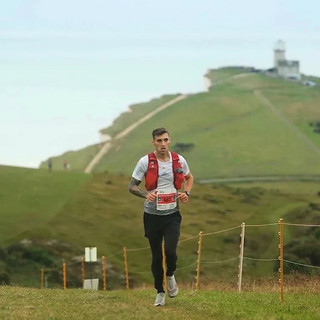

I tell my athletes that race day is a celebration - of all the hours and miles that came before, all the hard work and sacrifice. On February 14th, that day finally arrived after more than four months of 5am alarms, early nights, double days, tedious strength sessions, and daily exposure to the unrelenting PNW winter. That celebration didn’t just fail to deliver. It looked me square in the eye, turned around, and walked the fuck away.
The Block
After Tor des Géants, I made two decisions that would shape everything that followed. I began working with sports psychologist Nickamedus de la Rosa, and I started training with the Bowerman Track Club under the watchful eye of Elliott Heath. A sports psych session every two weeks, two workouts, one structured long run, and as much easy trail mileage as my body could handle each week. It sounds simple because it is - but with training and genuine introspective mindset work dialled in together, I felt like I’d finally found the missing piece.
What surprised me most was the community. In my own coaching work I emphasise a holistic approach - happy athletes run well - and joining BTC reinforced everything I already believed. New friends, shared miles, the kind of camaraderie that makes long-term consistency feel effortless rather than earned. Despite a life and early 2026 that has been turbulent at times, running had become genuinely joyful. The process was working. I was climbing.
By January the fitness was undeniable. A comfortable 72-minute half marathon three weeks before Tarawera - running at marathon effort the entire time, aerobic throughout, bouncing back to full training within days - seemed to confirm what the training data had been telling me for weeks. The shape was there.
There was an IT band niggle that needed managing from late December, but it faded with ten days to go. The taper felt right. Everything pointed toward something special.
Race Week
I travelled to New Zealand with training partner and close friend Liam Meirow, who was racing the 50k. Race week was everything you’d hope for - smooth travel, great sleep, morning walks to a local coffee spot, shakeout runs through the Redwoods, natural hot springs, and a genuinely surreal elite athlete BBQ at a petting zoo.
The BBQ was organised by UTMB and somehow involved lions. Real ones. I discovered at close range that I am not, as it turns out, the kind of person who remains composed when a lion growls at them from a few feet away. I was not alone in finding this unsettling... or maybe I was. It was the perfect absurdist prelude to racing - somewhere between a fever dream and a team bonding exercise, the kind of evening that reminds you that this life, for all its hard miles and early alarms, is genuinely ridiculous and wonderful. It was there we met Alina Jäger and Shane Goodhew, two people whose warmth and easy company made the dinner feel less like a pre-race obligation and more like an evening with old friends. We stayed grounded, handled race admin on our own terms, and arrived at the start line feeling present and ready.
Then Friday came
A phone alarm cut through the silence of the hotel room - not my race alarm, but a red weather alert for flooding. We watched from the window as torrential rain battered our rental car for hours, its tires slowly disappearing beneath standing water. I set my race alarm for 4am, drifted to sleep listening to rain hammer the windows, and told myself it didn’t matter.
Saturday - Race Day
Race morning. A waterlogged field. I hopped on a bus filled with baggy eyes and quiet nerves that made its way to the start in what can only be described as Fast and Furious fashion. Lining up in the elite pen, flanked by genuine legends of the sport - Dan Jones, Ruth Croft, and Petter Enghal. It felt real. It felt earned.
The race started viciously. A lead pack went through the opening flat nine miles at low 6-minute pace. I let them go.
Knowing the history of this race, knowing what those splits mean over 100k, I settled into my own rhythm and tried to be a rock in a river - steady, immovable, watching leaves float by. The course rolled through forest roads, warm and dripping, the humidity sitting thick around every turn. My legs felt controlled. My head felt clear. I came through the first checkpoint at one hour, exactly where I wanted to be.
The next section climbed and rolled, and slowly, quietly, the race began coming back to me. I started moving through the field, picking off runners who had gone out far too hard - including some big names I’d spent years looking up to, athletes whose race reports I’d read, whose results I’d tracked. Passing them felt significant in a way that’s hard to articulate. Not triumphant, just… confirming. Like the training had been telling the truth all along. The warm wet air filled my lungs and for a while, everything was exactly as it was supposed to be.
Then, somewhere around mile 19, on a descent, it happened. A tearing sensation in my hip and IT band. I kept moving - slower now, managing - through the next aid station and on toward the checkpoint at mile 26. The two miles of uphill into that station were torture. Every step tested it. Ruth Croft passed me on that climb, unsurprisingly she would go on to win the women's race for the 4th time.
I took stock at the aid station. Hard reset. Decided to keep going, to trust the leg would come back. It didn’t. Three more miles of even steeper uphill only exacerbated the injury, and at mile 33 - after more than an hour of walking through a tropical downpour - I sat down and withdrew from the race. And was presented a pair of crutches as a prize.
The Quiet
There’s a place I go when a run is going really well. Not a physical place - a mental one. When the effort and the body and the moment align perfectly, the noise stops. The constant hum that lives in my head since my brain injury - ever-present, relentless, the uninvited guest that never leaves - goes quiet. Just for a while. Just enough. It’s the closest thing to peace I know, it’s the only time I ever feel truly normal, and it’s a large part of why I run.
I didn’t find it on February 14th. In fact, it’s been too long since I last did. And that, more than the DNF itself, is what stings.
When you walk into an aid station and pull your race bib off, there’s no flow state waiting on the other side. No stillness. Just the hum, louder now somehow, and the rain, and the long bus ride back. I sat there in the wet and the quiet that wasn’t really quiet at all, and felt the absence of the thing I’d been chasing for four months.
I don’t know when I’ll find it again. But I know I will.
What This Actually Means
Liam’s race didn’t go to plan either. In the aftermath - cold, wet, processing - I found myself thinking about something I’d said to Alina Jäger before the race start:
“The people who have the best races are those who slow the least. Your slowest pace matters more than your fastest.”
Sitting with a DNF, I think that applies more broadly than I realised. The people who achieve the most over the long term are those who remain steadfast through the lows. Anyone can execute training when the positive reinforcements keep coming - race wins, personal bests, good health. But executing when the hard work isn’t being rewarded, when you go all in and the dealer still takes everything? 3 times in a row? That’s different. That’s really hard. And it requires mourning. Real mourning.
Throughout this block, Nickamedus introduced me to mantras and practices that have become part of how I operate. 'Right here, right now. Step in.' Useful in training, useful in racing - but it turns out they’re just as powerful in processing loss. Learning to sit in the discomfort of what happened. Acknowledging it fully. And then, slowly, moving through it.
The celebration got away from me on February 14th. But the work - the 5am alarms, the double days, the rainy PNW miles, the mindset sessions, the community built at BTC - none of that disappears because of one day on one trail in New Zealand.
The process was real. The fitness was real. The next chapter starts now.
My training partner and good friend Scott Olberding has a saying that’s been rattling around my head since mile 33: 'All it takes is all you’ve got.' On February 14th, I gave everything I had. Sometimes that’s not enough to finish the race. But it’s always enough to start the next one.
Ajay


Comments